
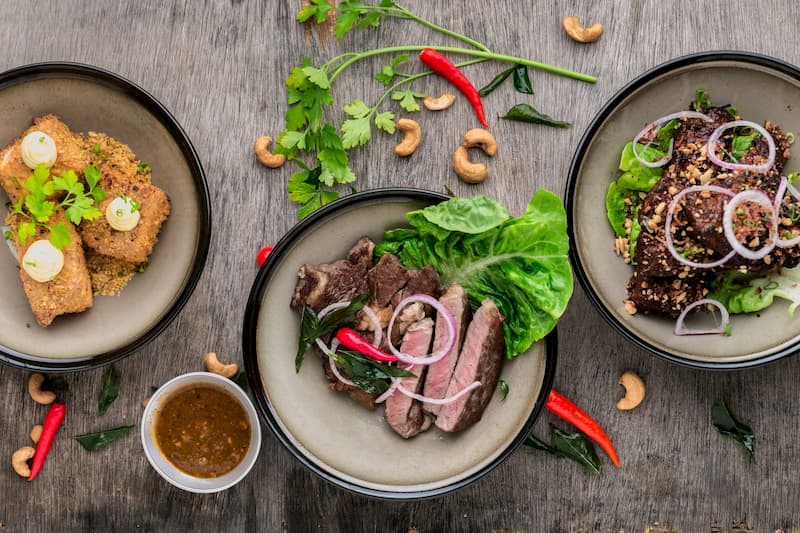
Imagine this: You are on a new diet, but instead of feeling hungry and restricted … you are bursting with energy and the weight is dropping. Welcome to the Keto diet. It’s a high-fat, low-carbohydrate eating plan that has gained popularity in recent years.
Seems counter-intuitive – Eating fat to lose fat? But that is exactly what happens in Keto. Here is everything you need to know about this diet, including tips for reaching your weight loss goals and solving common problems. As with any diet, before diving, check with your doctor before making any changes.
WHAT IS THE KETO DIET?
The keto diet is short for “ketogenic diet.” It is a high fat and low carbohydrate eating plan that has the potential to turn your body into a fat burning machine.
The keto diet changes the way the body converts food to energy. Normally, your body turns carbohydrates (think of bread or pasta) into glucose for energy. Eating too much fat and too few carbohydrates puts you in ketosis, a metabolic state in which your body burns fat instead of carbohydrates for fuel [1] .
WHAT ARE KETONES?
When your body can’t get glucose, your liver turns body fat and dietary fat into molecules called ketones, an alternative fuel source. This puts the body into ketosis, also known as a first-class weight loss mode [2] [3] .
According to some metabolic experts, you are in a state of ketosis when your ketone levels give 0.5-3.0 millimoles per liter. The keto diet is one way to make your body make ketones. Other methods of producing ketones include intermittent fasting and the use of glucose stores by exercise.
BENEFITS OF THE KETO DIET
The keto diet accelerates weight loss because your body converts the fat you eat and fat stores into ketones. And unlike glucose, ketones cannot be stored as fat because they are not digested in the same way.
Surprising … right? For decades, you’ve heard that fat makes you fat! Your body is built to use fat as an alternative fuel source. For most of history, people did not eat three meals or sodas or snacks throughout the day. Instead, humans had to hunt and gather food, they learned to thrive when food was not available, sometimes for days on end. To survive, their bodies used stored fat for energy.
Thanks, evolution.
SOME BENEFITS OF A KETOGENIC DIET FULL OF QUALITY FATS:
- Burn body fat: When you’re in keto, your body uses stored body fat and the fat you eat for fuel. The result? Weightloss. [5]
- Reduces appetite: Ketones suppress ghrelin, the hunger hormone, and increase cholecystokinin (CCK), which makes you feel full. [6] Reduced appetite means that it is easier to go longer without eating, which encourages the body to dive into fat stores for energy. More research is needed in the area of appetite and ketosis, but it seems that many people experience a reduction in hunger.
- Reduces inflammation: Inflammation is the body’s natural response to an invader that it considers harmful. Too much inflammation is bad news because it increases the risk of health problems. A keto diet can reduce inflammation in the body by deactivating the inflammatory pathways and producing fewer free radicals compared to glucose [7] [8] .
- Feed your brain: Ketones are so powerful that they can supply a good portion of the brain’s energy needs, which is much more efficient than the energy you get from glucose. Did you know that your brain is made up of more than 60 percent fat? [9] That means it needs a lot of grease to keep the engine buzzing. The quality fats you eat on a keto diet do more than fuel your daily activities – they also feed the brain.
- Increase energy: When your brain uses ketones for fuel, you don’t experience the same drops in energy as when you eat a lot of carbohydrates. When your metabolism is in fat burning mode, your body can take advantage of readily available fat stores for energy. That means no more energy shocks or brain fog. Ketosis also helps the brain create more mitochondria, the power generators in cells [10]. More energy in cells means more energy to do things, like Catalans.
- Reduces cravings: Fat is a satiating macronutrient. You eat more smart fats in keto, so you feel fuller, longer. [11] [12]
HOW TO LOSE WEIGHT WITH THE KETO DIET
So … How do you lose weight with the Keto diet?
When you start to eat more fat and eliminate carbohydrates (think sugar, bread and pasta), you tend to experience fewer blood sugar swings and cravings than most people. When your body runs on ketones for fuel, it has a constant supply of energy in the form of body fat. When your body depends on glucose, it needs a regular dose of carbohydrates to keep it going.
Ketones can help control hunger and satiety hormones so you feel full and fulfilled, not angry. This means less cravings, more energy, and an increase in fat burning. Is that how it works.

HOW KETONES AFFECT HUNGER HORMONES
Ketones affect cholecystokinin (CCK), a hormone that makes you feel full, and ghrelin, the “hunger hormone.”
- CCK: Your intestines release CCK after eating. It is a powerful regulator of food intake – so much so that a study that injects CCK into obese men causes them to cut down on their meals [13] . Ketones increase CCK levels so you are truly satisfied after meals.
- Ghrelin: Ghrelin is called “the hunger hormone” because it increases appetite. It is released from the stomach and intestines, and blood levels peak when you fast. When you finally eat food, ghrelin drops circulate in your blood in response to nutrients. Ketosis suppresses the increased ghrelin levels that occur with weight loss [14] . Therefore, when you are in ketosis, you are not constantly thinking about the next meal.
WHAT TO EAT IN THE KETO DIET
The keto diet is quite simple: Eat mostly healthy fats (75% of daily calories), some protein (20%), and a very small amount of carbohydrates (5%). This is the breakdown that many keto beginners follow, but you may have to adjust the numbers and test your ketones to see what works for you.
Choose low-carb foods like meat, fish, eggs, vegetables, and healthy fats. Most people who do keto eat better between 30 and 150 grams of net carbs a day. “Net carbs” means that you can subtract fiber and sugar alcohols (such as xylitol) from your daily carbohydrate count – they do not affect blood sugar and are not stored as glycogen, the form of glucose storage. In the case of cremuta, it has 15.9 grams, of which 8.5g are fiber. Net carbs are 15.9 – 8.5 = 7.4g (totally fit!)
KETO DIET TYPES
- Standard: People on the standard keto diet eat very few carbohydrates (less than 50 grams of net carbohydrates per day), every day. Some keto fans eat as little as 20 grams per day.
- Cyclical: People who follow a cyclical keto diet eat high-fat, very few carbohydrates (less than 50 grams of net carbohydrates per day) five to six days a week . On the seventh day, they have carbohydrates (about 150 grams).
- Targeted: You follow the standard keto diet, but eat carbohydrates 30 minutes- 1 hour before a high intensity workout. Thus glucose is intended to increase performance and you return to ketosis after training. If your energy is suffering in the gym during keto, this style of eating can fit you.
- Moderate: You eat a lot of fat with 100-150 grams of net carbs every day. Women who experience problems with other forms of keto sometimes perform better on this diet – restricting carbohydrates can sometimes interfere with hormonal function. Also, some athletes find that they burn less than 100 grams of carbohydrates on training days.
- Dirty: The keto sucis diet follows the same ratio of fats, proteins, and carbohydrates as the standard keto diet, but with one change: It doesn’t matter where those macronutrients come from. Dinner could be a Big Mac without bread with a Pepsi light. Wrong. You have to eat real food.
HOW TO FIND THE STYLE THAT BEST SUITS YOU
- Check with your doctor first before making any major dietary changes.
- Try different keto styles for at least a month each.
- Set goals based on fat and carbohydrate intake rather than worrying about calories. Eat until you are full and listen to your body, it is wise.
Do you feel better on a weekly carbohydrate diet, or do you do better on a full keto diet? Are you exhausted when you drop below 100 grams of carbohydrates a day? There is a lot of variation within the low carbohydrate content and some people feel better with different eating styles. Find the good balance that works best for your personal biology.